
It was a day like any other—routine, you might say, though I’m still not ready to admit I have one. One of those days when I run out of work—not “in a hurry,” but literally running. At 6:55 pm, I change out of my serious black work shoes and put on my blue sneakers, the ones with a hole in the front where my little toe sticks out.
At 6:58 or 6:59, if work conditions allow it—meaning if the boss isn’t around—I run out. I usually run three blocks to a bus stop and take the first bus that comes to get closer. Roma Termini isn’t far from my job, but it’s uphill, the train leaves at :24, and the platform is always 1 or 2 EAST. In other words, at the far end of the station—so I either run or I run, no other option, because the next train to my beautiful little town of Montefiascone is at 9 pm.
If I’m lucky—and this time I was—I catch a bus that drops me right in front of the station. I get off running and still have 10 minutes to reach the platform. I cross the entire station saying “Scusi, grazie, scusi.” Suddenly, I become one of those rushed people who push past others and glare at anyone walking slowly in an endless station like Termini. At least I say excuse me. I pass the gate with my monthly train pass and at :22 I get on the train. That’s my normal day; the trip in the morning is pretty similar—always rushing. But this one was different.
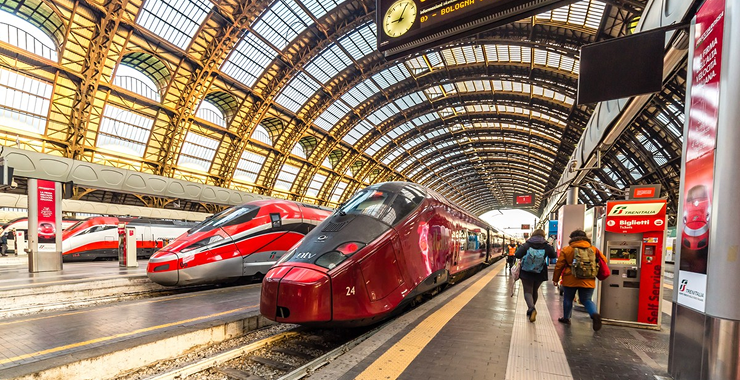
As soon as I get on the train, I step into the first carriage, where I find a group of seven young nuns rehearsing a choral “Alleluia,” sitting together. Yes, in Rome it’s very common to see many of them everywhere, but it surprised me to see such young ones—and singing together. They were sitting facing each other, with an empty seat nearby. There were other seats just behind them, so I sat there to listen. Many people, seeing nuns singing, moved to another carriage, but I found it exciting. I heard them speaking Italian with a slightly unusual accent, and little by little I began to catch words in Spanish.
The train had just started moving. I turned around, greeted them, and asked where they were from. They all answered at the same time, very warmly.
They laughed about it, and one of them took the lead and told me their countries: Ecuador, Spain, Panama, El Salvador, Egypt, and two from Ukraine. They invited me to sit with them, shyly and respectfully, as if afraid I might refuse. Of course I accepted, and that’s how a conversation of almost an hour and a half began.
Where are you from? How long have you lived in Italy? What’s your stop? Why do you live here? Where do you work? How old are you? They were very curious about me, and as I answered, all kinds of interesting conversations unfolded. Many were my age, they studied at the Rocca dei Papi in Montefiascone, very close to where I live, and their congregation had actually been founded in my home country, Argentina.
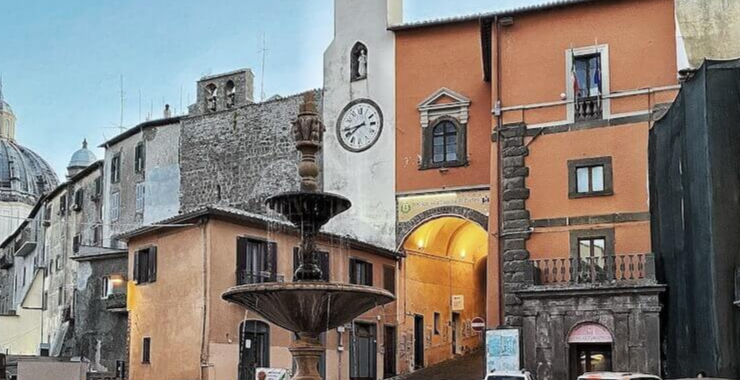
They belonged to the Congregation of the Daughters of Our Lady of Luján and were studying for a three-year period. Many of them were in their third year, so they were now studying in Spanish: the first two years are in Italian and the last in Spanish, since the congregation was founded in Argentina.
They told me that because of this, many of the sisters and even several teachers were Argentine. “There are people from all over the world, and the funniest thing is hearing sisters who are Italian, Chinese, or Ukrainian speaking with your accent,” said the youngest, an Ecuadorian girl.
They are allowed to see their families every two years for a month if they are from abroad, or once a year for fifteen days otherwise. All of them had done volunteer work in different parts of the world—Mozambique, Brazil, Ukraine, Guatemala—working in orphanages, rural schools, and hospitals.
Each of them had two or more names, because when they enter religious life they are baptized again. The only one I remember is María de las Almas, also called Valeria, the 22-year-old Ecuadorian sitting next to me. We talked about Ecuador, South America, our families, and university.
She told me that since she was 16, she had felt her vocation and didn’t want to study anything, unlike her siblings, who—her exact words—were “more normal.”
The way she said it made me laugh. For her, “normal” meant that her siblings had chosen to study nursing and other degrees. We both laughed. Her family had struggled to accept her decision at first, but now everything was fine, and they were coming to visit her in July.
They asked for my number, no pressure, to invite me to activities they organize in Montefiascone. They gave me their songbook, since I had told them I used to sing in a choir when I lived in Pergamino, Argentina. When they got off—one stop before mine—they all hugged me and thanked me for such a spontaneous and interesting encounter.
At no point did anyone ask me about my religion or whether I believed in anything. It was simply an encounter with seven young women who had chosen a very different path from mine, without judging it. All dressed in their blue or black habits from head to toe, yet having the same conversations as any 26-year-old. It was a different journey home, one that makes me feel I still can’t quite say I have a routine. Or maybe I do… but in your routine, do you run into nuns singing on a train?