
From the room’s window, you can see one of the islands of Lake Bolsena: the small Isola Martana. This island, about 510 meters long and 280 meters wide, has a crescent shape and was formed approximately 130,000 years ago. Today it appears as a peaceful and mysterious place, covered with vegetation and surrounded by calm waters. However, nearly 1,500 years ago it became the setting for one of the events that would profoundly change the course of Italian history: the imprisonment and murder of Queen Amalasuntha.

Italy in the 6th Century
To understand Amalasuntha’s story, one must imagine an Italy very different from the one we know today.
The Western Roman Empire had fallen in 476 AD. Yet its cities, laws, roads, and much of its culture remained an essential part of everyday life. Italy was ruled by the Ostrogoths, a Germanic people who had conquered the peninsula under the leadership of King Theodoric the Great.
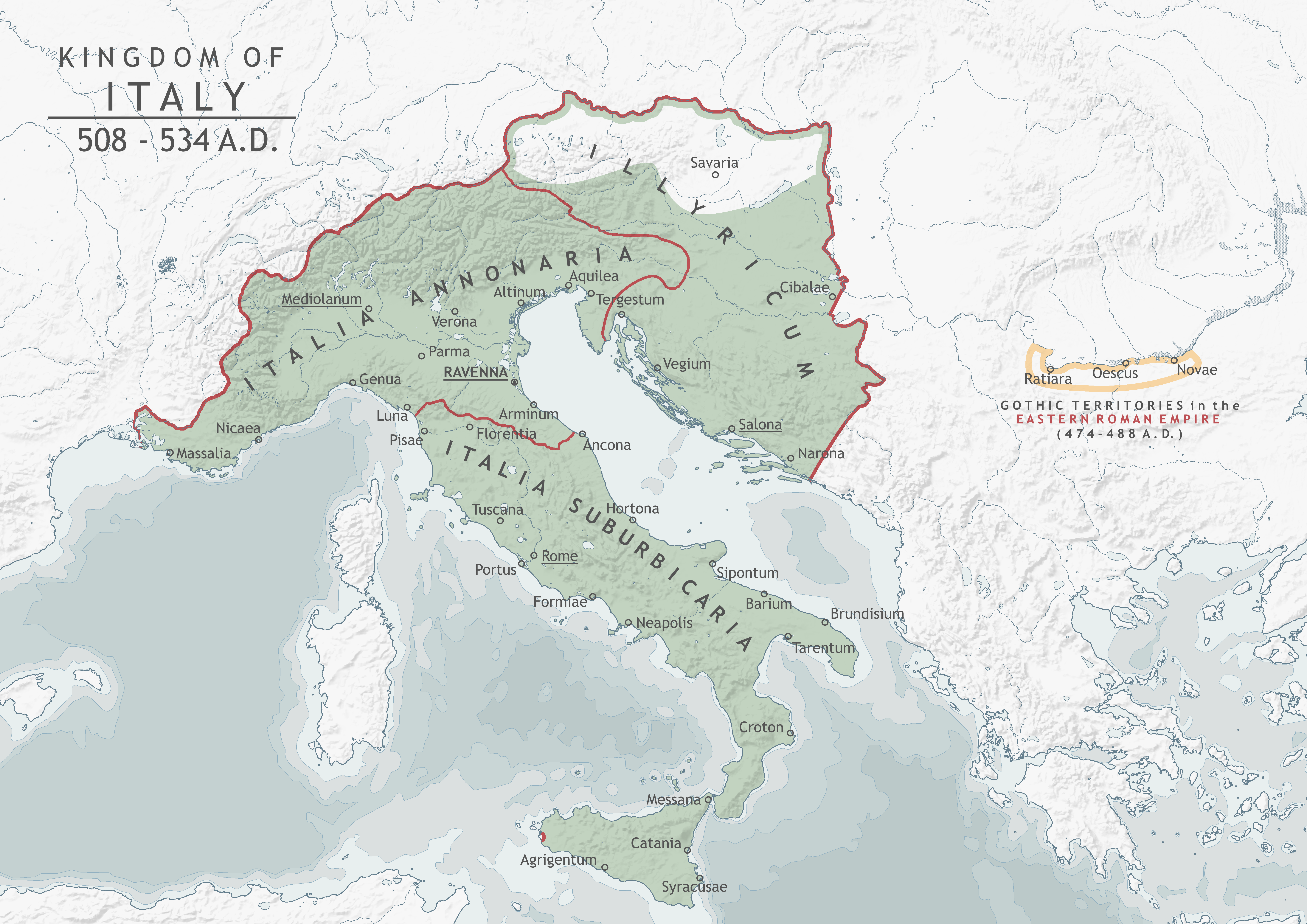
The capital of the kingdom was Ravenna, not Rome. From there, almost all of Italy was administered, together with Sicily and nearby territories that today belong to Croatia and parts of the Alpine regions.
The Birth of an Extraordinary Princess
Amalasuntha was born around 495 AD. She was the daughter of Theodoric the Great, one of the most powerful rulers in Europe.
Unlike many women of her time, she received an exceptional education. She learned Latin and Greek, studied literature and philosophy, and grew up in an environment where Roman and Germanic traditions coexisted.
She married the Ostrogothic noble Eutharic and had two children: Athalaric and Matasuntha.
When Theodoric the Great died on August 30, 526, his grandson Athalaric inherited the throne. However, the new king was only ten years old.
Amalasuntha therefore assumed power as regent.
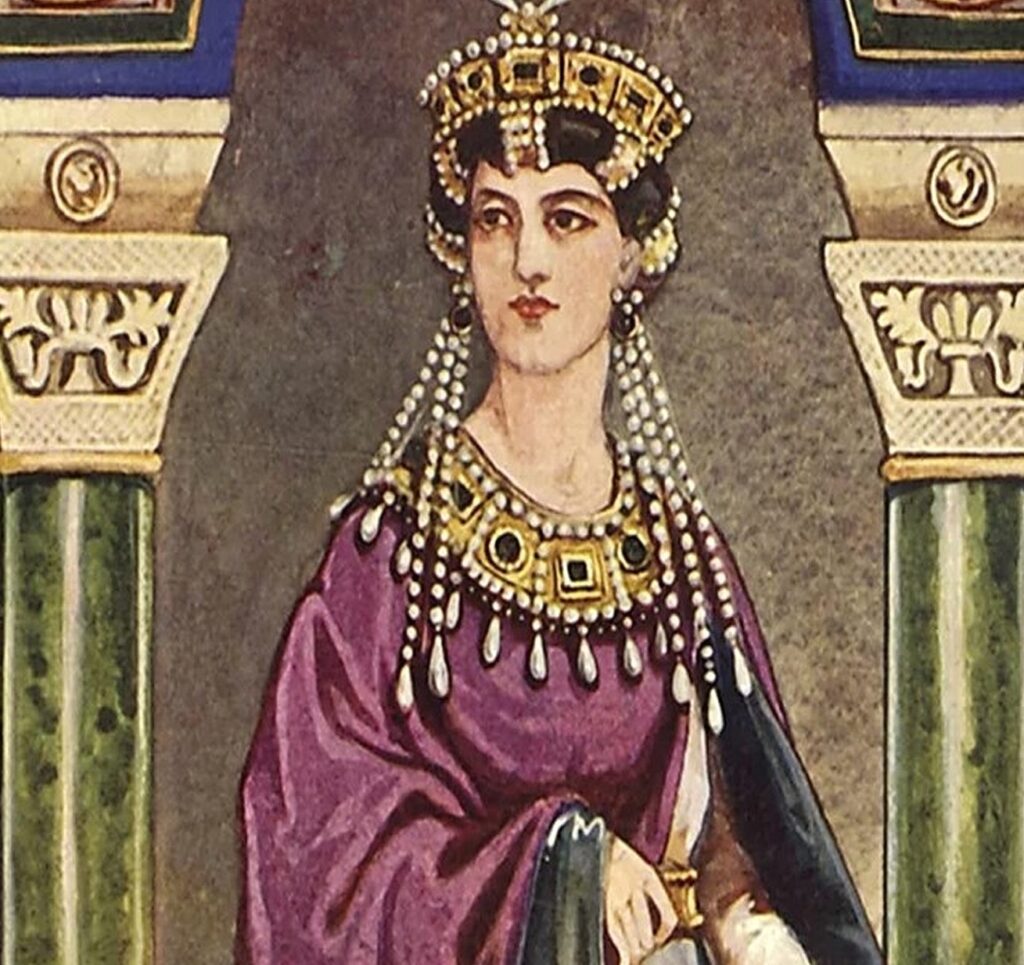
For almost ten years, from 526 to 535, she was the person who truly governed this vast and complex Italy. Imagine what it meant for a woman to remain in power for a decade over such a strategic territory. It was an extraordinary situation, and it inevitably earned her many enemies.
Historians generally regard her as a ruler far ahead of her time. She sought to preserve the Roman heritage, promoted education, maintained the imperial administration, and cultivated good relations with Constantinople, the capital of the Eastern Roman Empire.
However, these policies provoked opposition among many Ostrogothic nobles, who considered her too Roman in her outlook.
The Death of Athalaric
In 534, her son Athalaric died while still very young, probably around the age of eighteen.
The death of the heir left Amalasuntha in a difficult position. Although she remained the most respected member of the royal dynasty, many nobles were unwilling to accept a woman ruling alone.
In order to preserve the stability of the kingdom, she decided to associate her cousin Theodahad with the throne. By this time, she had already been a widow for several years. Historians are uncertain whether she ever intended to marry Theodahad or simply share power with him. There is no evidence that a marriage ever took place.
This decision would ultimately change both her fate and that of Italy.
Shortly after becoming king, Theodahad began plotting against her.
In 535, he ordered her arrest and sent her as a prisoner to Isola Martana, the tiny rocky island you can see from the window. At that time, members of royal families were often exiled to small islands, where they could be more easily controlled. Ancient sources suggest that Amalasuntha was kept under guard in a residence or building on the island, with no possibility of leaving.
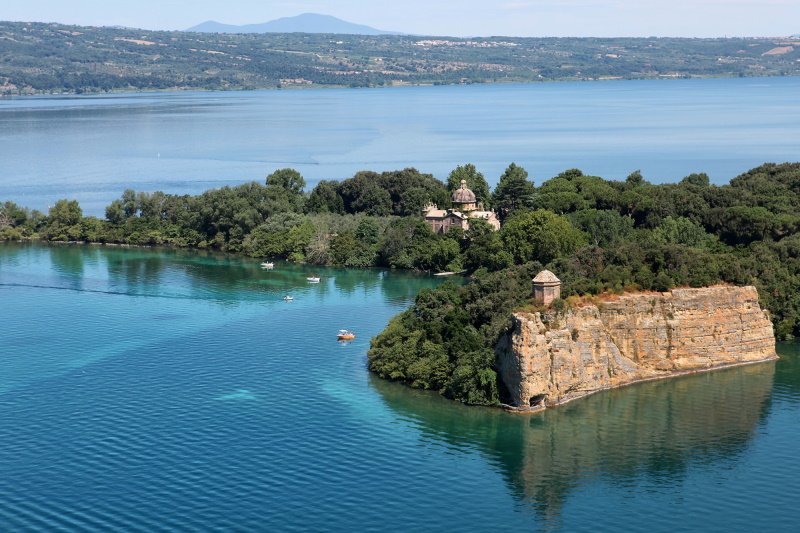
For a woman who had ruled Italy from the palaces of Ravenna, the contrast was dramatic. The queen who had governed one of the most powerful kingdoms in Europe found herself isolated on a small island in the middle of a volcanic lake.
A few months later, she was murdered. She was approximately forty years old.
Historical sources disagree on the exact manner of her death, but all identify Theodahad as the person responsible.
What Happened to Her Daughter?
While Amalasuntha and her son became victims of political struggles, her daughter Matasuntha experienced a very different fate.
After her mother’s murder and the outbreak of the Gothic War, Matasuntha survived the fall of the Ostrogothic Kingdom. She later married Germanus, one of the most important generals of the Eastern Roman Empire and a cousin of Emperor Justinian.
This marriage carried great political significance. Through Matasuntha, the dynasty of Theodoric and the Byzantine imperial family were symbolically united, despite having been enemies during the war.
Their son, also named Germanus, was descended from both the Ostrogothic royal family and the imperial family of Constantinople. In this way, Amalasuntha’s bloodline continued within the highest ranks of Mediterranean aristocracy long after her kingdom had disappeared.
Amalasuntha’s death had enormous consequences.
Emperor Justinian used her murder as a justification for military intervention in Italy.
That same year, the Gothic War began, a conflict that lasted almost twenty years and devastated much of the Italian peninsula.
By the end of the war, the Ostrogothic Kingdom had vanished forever.
For this reason, many historians consider Amalasuntha’s death on Isola Martana to be one of the events that transformed the destiny of Italy.
The Island’s Legend
Over the centuries, history gradually blended with legend.
The inhabitants of the region began telling stories of mournful cries that could be heard coming from Isola Martana on foggy nights. According to local tradition, these sounds are the spirit of Amalasuntha, the betrayed queen who never left the place where she lost her life.
Today, the island remains one of the most enigmatic places on Lake Bolsena. Behind its beauty lies the true story of a cultured, powerful, and remarkable woman who ruled Italy for almost a decade and whose murder changed the course of history.